
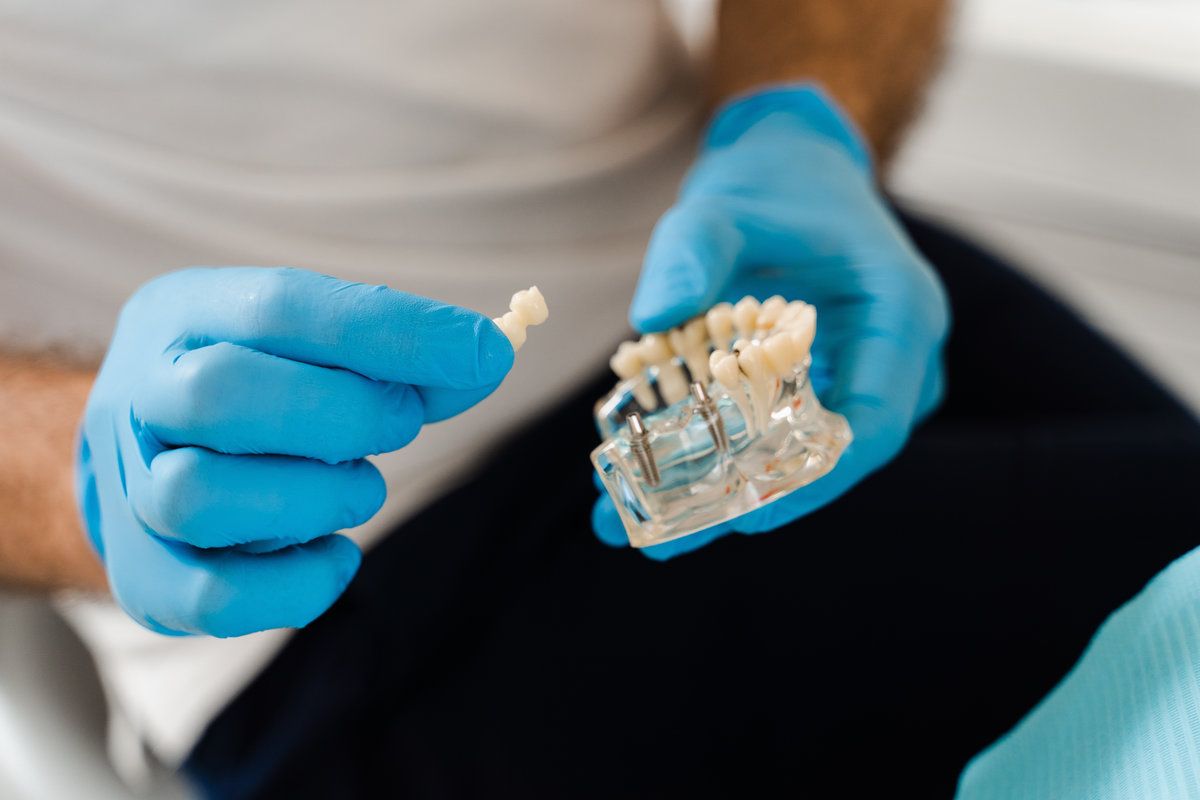
A denture that clicks when you laugh or drifts when you eat isn’t a small annoyance. It’s a daily reminder that something about your smile isn’t quite yours anymore. Full-mouth dental implants solve that problem at the source by anchoring an entire arch of replacement teeth directly into the jawbone, so the result moves, bites, and feels the way natural teeth once did.
At Dee for Dentist, we’ve built this process around one goal: making sure patients know exactly what’s happening at every stage, from the first scan to the final set of teeth. Because this treatment asks for real trust and real time, we think patients are owed a clear map of what comes next, not vague reassurances.
The Initial Consultation and Assessment
Your first visit focuses entirely on gathering information. We review your dental and medical history, discuss your goals for treatment, and perform a thorough clinical examination of your jawbone, gum tissue, and any remaining teeth. This conversation also gives us a chance to understand any concerns you have about the process, including timeline, comfort, and cost.
From there, we use advanced imaging to build a complete picture of your oral anatomy. Our practice relies on Axeos cone beam computed tomography for advanced airway and bone analysis, which allows us to see bone density and structure in three dimensions rather than guessing from a flat X-ray. This level of detail helps determine whether you have enough healthy bone to support implants right away or whether additional preparation, such as bone grafting, may be recommended first.
Digital Planning and Surgical Guidance
Once we have your imaging, treatment planning moves into a digital environment. This step is where full-mouth implant cases are won or lost, because precise placement affects everything from how the final teeth fit together to how long the implants last. We rely on digital, surgically guided implant placement with Straumann dental implants, which lets us map the exact position, angle, and depth of every implant before we pick up a surgical instrument.
This digital approach offers real advantages over older, freehand methods. A guided surgical plan reduces guesswork, which can shorten your time in the chair and lower the risk of complications. It also means the final restoration can often be designed alongside the surgical plan, so the transition from implant placement to a functioning set of teeth happens on a more predictable schedule.
What Happens on Surgery Day
On the day of your procedure, we place the implants according to the digital plan we built together. For many full-mouth cases, we place a set number of implants, often four to six per arch, strategically positioned to support a full arch of replacement teeth. Because we mapped out the plan in advance using your CT imaging, the surgical guide directs precise placement without extensive manual measurement during the procedure.
Depending on your individual case and the stability of your jawbone, you may leave with a temporary set of teeth attached the same day, allowing you to eat and speak with confidence while your implants integrate with the bone underneath. Recovery varies from patient to patient, and we walk you through what to expect after your procedure so you know how to care for the surgical site and manage any discomfort in the days that follow.
Healing, Integration, and the Path to Your Final Restoration
The months following surgery are just as important as the procedure itself. Implants need time to fuse with the surrounding bone in a process called osseointegration, and this foundation is what allows your final restoration to function like natural teeth for years to come.
A large-scale national study of implants with simultaneous bone grafting found a 97.83% clinical success rate, underscoring how predictable modern implant placement has become when the surgical plan and follow-up care are managed carefully, according to research published by the National Library of Medicine.
During this healing period, we monitor your progress with follow-up visits to confirm everything is integrating as expected. Once your dentist confirms the implants are stable, we move forward with designing and fitting your final restoration, a custom set of teeth built to match your bite, facial structure, and aesthetic goals. Many patients are surprised by how natural the final result looks and feels compared to the temporary teeth they wore during healing.
Caring for Your New Smile Long-Term
Full-mouth implants are built to last, but that longevity depends on consistent care. We recommend the same daily brushing and flossing habits you would use with natural teeth, along with regular dental visits so we can check your gum health and the stability of your implants over time. Patients often ask how long dental implants last. While results vary based on bone health and home care, well-maintained implants are designed to serve patients for many years.
We also encourage patients to bring any questions about diet, oral hygiene tools, or minor changes in bite feel to their follow-up appointments rather than waiting until their next scheduled cleaning. Catching small issues early protects your investment and keeps your smile functioning the way it should.
Ready to Explore Full-Mouth Dental Implants? Contact Dee for Dentist
Full-mouth dental implants represent one of the most transformative options in modern dentistry, giving patients back the ability to eat, speak, and smile without the limitations of missing teeth or unstable dentures. At Dee for Dentist, our team combines digital planning, surgically guided placement, and Straumann implant technology to give every patient a clear, predictable path from consultation to final restoration.
If you are exploring whether full-mouth implants are right for you, our team is here to answer your questions and walk you through a personalized treatment plan. Contact us today to schedule your consultation and take the first step toward a smile that functions and feels like your own.