
Advanced dental technology cannot treat your heart or lower your blood sugar on its own, but it can help your dental team find gum disease, bone loss, and other oral problems earlier and treat them more precisely. That matters beyond your smile, because researchers have repeatedly found associations between oral health, especially gum disease, and conditions such as diabetes and heart disease. If you have been treating your dental checkups as a twice-yearly formality, it may be worth knowing what the evidence actually says and where modern tools fit in.
At Dee for Dentist in Las Vegas, we have built our practice around the idea that good dentistry is part of good overall health care. Led by Dr. Dee Dee Meevasin, DMD, our team uses technology listed throughout our site, including AI-assisted X-ray review, laser dentistry, and same-day CEREC crowns, to catch problems early and treat them comfortably. Staying on top of your teeth cleanings and exams is one of the most practical things you can do for your long-term oral health, and this post explains how those visits connect to the rest of your body without overstating the science.
What the Research Says About Oral Health and the Rest of the Body
Scientists have studied the oral-systemic connection for decades. Studies have found strong associations between gum disease and conditions like heart disease, diabetes, respiratory illness, and pregnancy complications. The National Institute of Dental and Craniofacial Research also notes that while these links are well documented, their exact causes are still not clear. An association means the conditions tend to show up together. It does not prove that one causes the other.
That distinction is important for you as a patient. Gum disease and many chronic conditions share risk factors such as smoking, age, and diabetes, so some of the overlap may come from those shared factors. What the research does support is that chronic inflammation in the gums is worth taking seriously, and that keeping your mouth healthy is a reasonable part of caring for your overall health.
Diabetes: The Clearest Two-Way Relationship
The link between gum disease and diabetes is the best studied. Diabetes can make gum disease more likely and more severe, and gum disease can make blood sugar harder to manage. A 2022 Cochrane review of periodontal treatment in people with diabetes found that professional gum treatment lowered HbA1c, a measure of average blood sugar, by about 0.3 percentage points six months after treatment compared with no treatment or usual care. That is a modest change, and it does not replace medical care, but it suggests that treating gum disease may be a helpful part of diabetes management.
Heart Disease: Associated, Not Proven to Be Caused
A 2012 American Heart Association scientific statement concluded that gum disease is associated with atherosclerotic vascular disease independent of known confounders, but that the evidence does not show gum disease causes heart disease or that treating it prevents heart problems. We share that view. Healthy gums are worth protecting for their own sake, and if you have heart disease, your dentist and physician should both know about your oral health.
Pregnancy and Other Health Conditions
Researchers have also reported associations between gum disease and preterm birth, respiratory infections, and other conditions. Hormonal changes during pregnancy can make gums more prone to inflammation, which is one reason routine dental care during pregnancy is generally encouraged. If you are pregnant or managing a chronic condition, let us know so we can coordinate timing and treatment choices with your physician’s guidance in mind.
Where Dental Technology Fits
Modern dental care has moved well beyond guessing and waiting. The value of technology for your overall health comes down to two things: finding problems such as gum disease and bone loss earlier, and treating them in a way that is precise and comfortable enough that you actually follow through. Here is how the tools we use support those goals. For a broader look at how these tools save time in the chair, see our post on why tech-forward dentistry means faster treatment.
Pearl AI: A Second Set of Eyes on Your X-Rays
Even the most experienced dentist is still human, and small changes on an X-ray can be easy to miss. That is where Pearl AI comes in. This FDA-cleared software reviews dental X-rays and highlights potential concerns, including cavities and changes in the bone that supports your teeth. Bone loss around teeth is one of the hallmarks of periodontitis, so earlier detection can mean earlier gum treatment. Pearl does not make the diagnosis. Your dentist reviews every finding, and you can learn more on our AI-powered dental technology page.
3D Imaging and Oral Cancer Screening
Some conditions need more than a standard X-ray. Our practice lists Axeos cone beam 3D imaging, which can give a more complete view of bone and supporting structures when a case calls for it, and OralID screening, a light-based tool used to help check soft tissues for changes that may need further evaluation. Neither tool replaces a careful visual exam or a biopsy when one is needed, but both give us more information to share with you and, when appropriate, with your physician.
Laser Treatment for Gum Disease
When gum disease is present, treating the infection below the gumline is the step that matters most. Our Solea laser delivers precisely targeted energy to remove decay and treat soft tissue with less disruption to surrounding healthy structures, and for most fillings we do not need anesthesia. Learn more about Solea laser dentistry and how we also offer periodontal laser therapy for patients dealing with gum disease. Dr. Milan Montero holds double certification in laser proficiency, and you can read more about laser-assisted gum treatment at our Silverado Ranch office.
CEREC Same-Day Crowns: Restoring Function Quickly
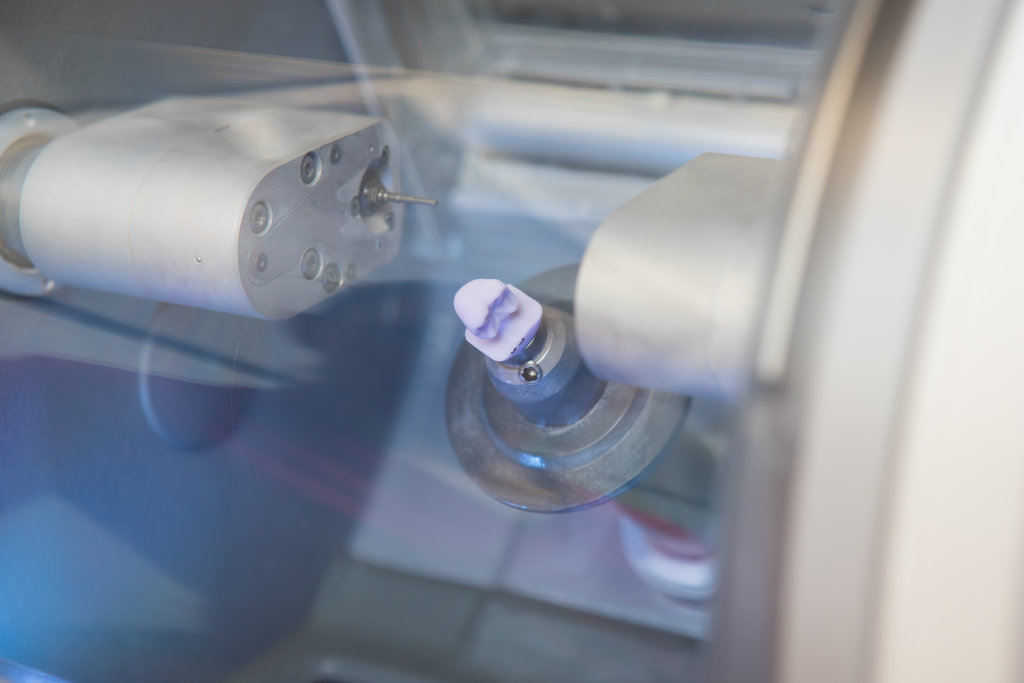
A damaged or missing tooth can change how you bite and chew, and some people start avoiding foods that are harder to eat. Restoring a tooth promptly helps you keep chewing comfortably and keeps a weakened tooth from breaking down further. Our CEREC technology lets us design, mill, and place a permanent dental crown in a single visit in many cases, so you are not waiting weeks with a temporary. Dr. Dee Dee has been a CEREC mentor since 2013.
What a Whole-Body-Minded Dental Visit Looks Like
These tools are most useful when they work together during routine care. Here is how a typical exam at our practice connects to your overall health:
- Health history review: We ask about conditions such as diabetes, heart disease, and pregnancy, plus your medications, because they can affect your gums and your treatment plan.
- AI-assisted X-ray review: Pearl AI helps flag early signs of decay and bone changes for your dentist to evaluate.
- Gum health check: We measure the pockets around your teeth and look for bleeding and inflammation, the early signs of gum disease.
- Targeted treatment: If gum disease is present, laser-assisted therapy or a deep cleaning can help reduce infection below the gumline.
If you want to know more about the warning signs we watch for during exams, our post on how your dentist can spot health problems early covers that in detail, and our guide to the hidden dangers of ignoring gum disease explains how the condition progresses.
What Dental Technology Cannot Do
We think it is just as important to be clear about limits. No dental tool can diagnose heart disease, diabetes, or any other medical condition, and treating your gums is not a substitute for care from your physician. What we can do is notice changes in your mouth, explain what we see in plain language, and suggest when it makes sense to share those findings with your doctor.
Technology also does not replace the basics. Brushing twice a day, cleaning between your teeth, avoiding tobacco, and keeping regular checkups remain the foundation of healthy gums. The tools in our office simply help us catch what home care misses and treat it with as little discomfort as possible.
Take the First Step Toward Better Oral and Overall Health at Dee for Dentist
Dr. Dee Dee Meevasin and our team have invested in technology that makes a routine dental visit more thorough, from AI-assisted X-ray review to laser gum therapy and same-day crowns. We serve patients across Las Vegas at our Silverado Ranch office, and our multilingual team is happy to answer questions about any tool or treatment before you decide.
Ready to see what a thorough, technology-supported exam looks like? Contact us today to schedule your appointment.
Frequently Asked Questions About Oral Health and Whole-Body Health
Does gum disease cause heart disease?
Research shows the two are associated, meaning they often occur together, but a causal link has not been proven. A 2012 American Heart Association statement found the association holds even after accounting for known shared risk factors, yet found no evidence that treating gum disease prevents heart disease. Healthy gums are still worth protecting, and your dentist and physician should both know your history.
Can treating gum disease help control diabetes?
It may help modestly. A 2022 Cochrane review found that professional gum treatment lowered HbA1c by about 0.3 percentage points six months after treatment in people with diabetes. That is not a substitute for medical care, but it suggests healthy gums can be one helpful part of managing blood sugar alongside the plan from your physician.
Can AI find gum disease on my X-rays?
AI software such as Pearl can highlight changes in the bone around your teeth, which is one sign of periodontitis, along with cavities and other findings. It does not diagnose gum disease on its own. Your dentist reviews the flagged areas and combines them with a gum exam, including pocket measurements, before recommending any treatment.
How often should I see the dentist if I have diabetes or heart disease?
Many patients do well with checkups every six months, but people with gum disease or conditions that affect healing are often advised to come in more often, such as every three to four months. Your dentist will recommend an interval based on your gum health, risk factors, and how your mouth responds to treatment.
Should I tell my dentist about my medical conditions and medications?
Yes. Conditions such as diabetes, heart disease, and pregnancy, and medications such as blood thinners or those that cause dry mouth, can affect your gums and change how we plan treatment. Sharing an up-to-date health history helps us choose safe options and know when to suggest that you talk with your physician about something we notice.