
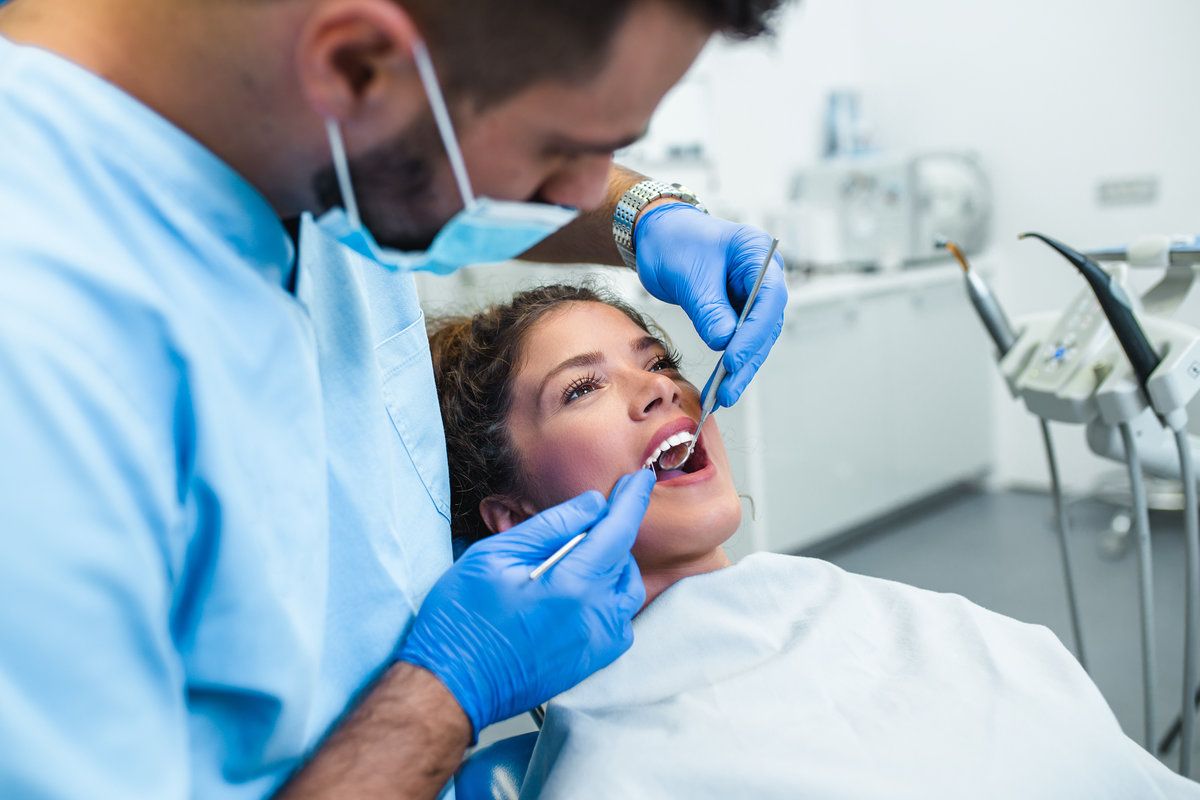
Nobody gets excited about hearing the words “deep cleaning” at the dentist. It sounds like something reserved for teeth that have committed serious crimes. But a deep cleaning, known in dental terms as scaling and root planing, is a lot less dramatic than the name suggests. It is simply a more thorough version of the cleaning you already know, aimed at spaces a toothbrush cannot reach, and it is one of the most effective ways to stop a small gum problem from becoming a much bigger one.
At Dee for Dentist, deep cleanings are one of the most common ways our team helps patients get ahead of gum disease before it turns into a bigger problem. Think of plaque like a house guest who overstays their welcome. A quick visit is easy to manage, but if that guest sets up camp under your gum line, it takes more than a polite reminder to get things back in order. That is where scaling and root planing come in, and once you know what actually happens during the appointment, it stops feeling like something to dread.
Why a Regular Cleaning Is Not Always Enough
Every regular cleaning removes plaque and tartar from the surfaces of your teeth and just below the gum line. That works well for most people most of the time. But when plaque is left undisturbed for too long, it hardens into tartar and starts creeping deeper, past the point where a toothbrush or a standard cleaning tool can follow.
Once that happens, your gums can start to pull away from your teeth, forming small pockets where bacteria like to hide out and multiply. Left alone, this is often how gum recession gets its start, since the tissue keeps losing ground the longer bacteria sit in those pockets. The CDC notes that these pockets deepen as gum disease progresses, which is exactly why a deeper approach becomes necessary. A deep cleaning is designed to reach those pockets directly, cleaning both the tooth surface and the root below the gum line.
What Actually Happens During the Appointment?
A deep cleaning has two parts working together, and neither one does much good without the other. Scaling removes the plaque and tartar that has built up on the tooth and below the gum line, while root planing smooths the surface of the tooth root so your gum tissue has a clean, even surface to reattach to. Removing the buildup is only half the job. Smoothing the root is what actually gives your gums a fighting chance to heal and snap back into place.
Depending on how much tartar has built up, your visit at Dee for Dentist may use the Solea laser instead of traditional hand tools. Dr. Dee Dee Meevasin was one of the first dentists in Nevada to bring Solea into her practice, and for many patients, laser treatment for gum tissue means we can work without the need for anesthesia. Instead of a numb jaw and a slow recovery, most people are back to their day the same afternoon. A lot of patients tell us this part alone changes how they feel about coming in for care, since the appointment itself stops being the scary part of the equation.
Skipping straight to scaling without root planing is a bit like sweeping a floor without ever mopping it. The surface looks better, but the underlying problem is still there.
Why the Two-Step Process Matters
Root planing gives your gum tissue a smooth landing pad, which is the part that actually allows healing to take hold instead of just delaying the next flare-up. Many patients assume the scraping sound and sensation they feel is the whole treatment, when in reality that root smoothing step is doing most of the long-term work.
What to Expect Once You Get Home
Most people are surprised by how manageable recovery feels, especially compared to what the phrase “deep cleaning” implies before their first visit. Your gums may be a little tender for a day or two, and you might notice some sensitivity when eating hot or cold food. That usually fades within a few days as your gum tissue starts settling back into place around your teeth. If you have ever wondered whether dental cleanings are painful in general, a deep cleaning follows that same pattern of mild, short-lived discomfort rather than anything severe.
A few habits can help the healing process along and are worth keeping in mind after your appointment.
- Stick to soft foods for the first day or two while your gums settle.
- Rinse gently with warm salt water instead of brushing aggressively near treated areas.
- Keep up with your regular brushing and flossing schedule everywhere else in your mouth.
None of these steps are complicated, and most patients find their gums feel noticeably calmer within about a week.
Catching Gum Disease Before It Catches You
Gum disease has a reputation for sneaking up on people, mostly because it rarely announces itself with real pain until it has already done some damage. Slightly puffy gums or a bit of bleeding when you floss can feel easy to brush off, but those are often the earliest signals that a deep cleaning would help more than a routine visit. Some patients notice these signs on their own, while others only find out during a routine visit that a laser gum disease treatment or a deep cleaning is the more appropriate next step.
This is also why our team keeps a close eye on gum health during every routine exam, using measurements around each tooth to catch pocket depth changes early. Combined with tools like Pearl AI diagnostics, we can often spot trouble before it turns into something that requires more advanced treatment down the road.
Getting Your Gums Back on Track With Dee for Dentist
A deep cleaning is not a punishment for something you did wrong. It is a targeted, practical way to stop gum disease from advancing and to protect the teeth you already have. Between Dr. Dee Dee Meevasin’s early adoption of laser dentistry in Nevada and Dr. Milan Montero’s double certification in laser proficiency, our team at Dee for Dentist has spent years refining a comfortable approach to periodontal care, all backed by digital tools that help us catch problems early rather than waiting for a bigger issue to show up.
If it has been a while since your last cleaning or your gums have felt a little off lately, there is no reason to wait for things to get worse before asking questions. Our team is glad to walk you through exactly what a deep cleaning would involve for your specific situation, and you can get that conversation started anytime through our contact form.